Down and up again

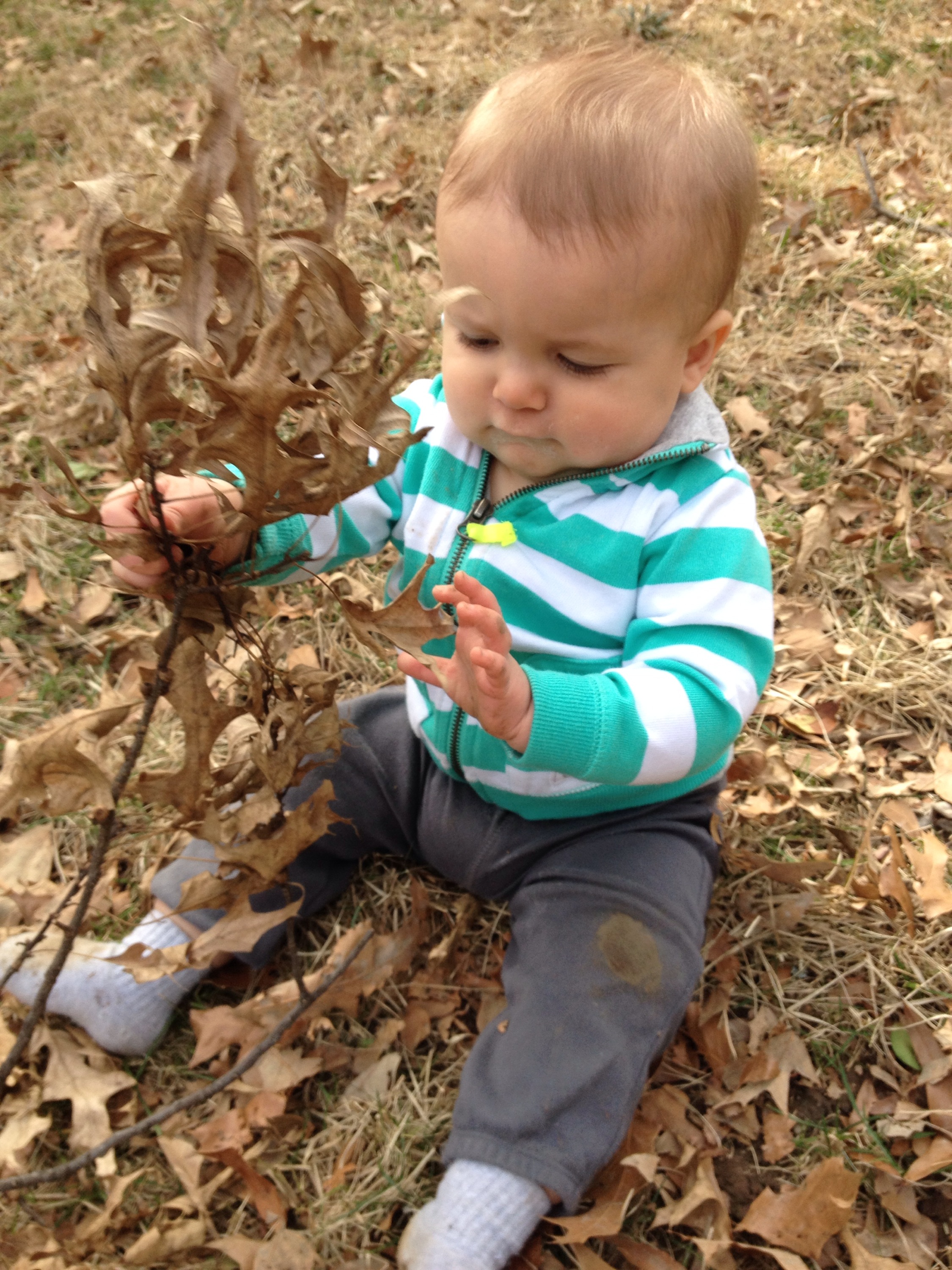
To set the scene: there is peace in the kingdom. The dog is upstairs; the kid is playing with a toy. I’m sitting in a chair alternately reading and having a conversation in repeated monosyllables while exercising my peripheral vision. Then it gets too quiet for a moment and the crying starts. Baby down. After a quick hug and happy murmurs from mama, he wants back on the ground so he can explore again. Repeat. Repeat. Repeat.

I’m the one who is here to say, “I bet that hurt. Want to try again?”

IMG_1200

2015 in Books, January

I started off 2015 by finishing up a few stragglers from 2014:

  • Neverwhere: A Novel by Neil Gaiman
    • Neil Gaiman is one of my favorite authors; I have yet to read one of his books that did not capture my imagination. Neverwhere is set in London Below, the underground city that parallels London Above along the city’s subway tunnels. Like his best works, he asks you what is real and never answers his question.
  • The Lost Tribe of Coney Island: Headhunters, Luna Park, and the Man who Pulled off the Spectacle of the Century by Clare Prentice
    • This nonfiction work looks at the experiences of a group of Bontoc Igorot tribespeople from a remote area of the Philippines who spent over a year on exhibit in the United States in the early nineteenth century and Truman Hunt, their exhibiter turned prisoner. I saw a review in the local paper, which is when I learned that part of the resulting court proceedings took place in Memphis. It’s a good story, but the well researched nonfiction is mixed with too much journalistic license for my historian tastes.

I also started and finished some others:

  • How Carrots Won the Trojan War: Curious (but True) Stories of Common Vegetables by Rebecca Rupp
    • I really like vegetables, and this book was a fun mixture of science, popular culture and history. I hope she writes more general nonfiction because I’m in.
  • Under the Fragipani by Mia Couto
    • This short novel was written by a Mozambican author. I try to break out of my American and European oriented fiction reading when I can, so I was excited to find this book at the last Friends of the Library book sale. Couto combines magical realism with legend and history, which made for a different, but immensely worthwhile, experience.
  • What Objects Mean: An Introduction to Material Culture by Arthur Asa Berger
    • I read Berger’s textbook at the museum to fulfill my self-imposed theory reading requirement for the next few months.
  • Best of Both Worlds: Museums, Libraries and Archives in the Digital Age by G. Wayne Clough
    • Surprisingly, not read for work. Clough is the Secretary of the Smithsonian, and I stumbled upon this free e-book while researching possible textbooks. It had been a while since I read any museum books, and we are working with technology upgrades in our redesign so I set aside some time for this one.
  • Against the Country: A Novel by Ben Metcalf
    • I received this book through the LibraryThing Early Reviewer program. Metcalf’s book combines rural noir genre writing with metafiction in a convoluted twist of run on sentences and large vocabulary choices. Like another reviewer, I thought that I would enjoy this book based on the publicity blurb about suicidal chickens and evil trees. However, I found his prose difficult to impossible to wade through at different junctures, particularly when his multiple parenthetical asides took up more space than the one paragraph main sentence of the chapter. The novel did grow on me towards the second half of the story, but it is not one that I would recommend.

#IsThisHowWeDoIt?

I like social media. I wouldn’t go so far as to say that I’m a social media junkie, but I definitely enjoy keeping up with friends, voyeuristically connecting with acquaintances and curating what I share with others. Facebook is my primary platform of choice, but I also use LinkedIn to showcase my CV. Pinterest is mostly for collecting recipes and pictures of Memphis murals, an odd, but real, passion. I initially stayed away from Twitter because it confused me and from Instagram because I came late to the smart phone revolution. Subsequently, I realized that I need to not be connected all the time and decided three social media profiles are enough. Too much “connection” feels alienating.

Nevertheless, I do think that social media platforms offer a real opportunity for nonprofits in general and museums in particular. Some places do it exceptionally well—like @SUEtheTrex (The Field Museum) on Twitter and The Charleston Museum on Tumblr. In fact, my favorite class to teach in museum studies is the afternoon we spend talking about social media and other marketing. I always ask my students to think up a broad based marketing campaign for one of the university’s museums, and the results are always better than I expected.

10933768_684337455655_5108720039152924279_n
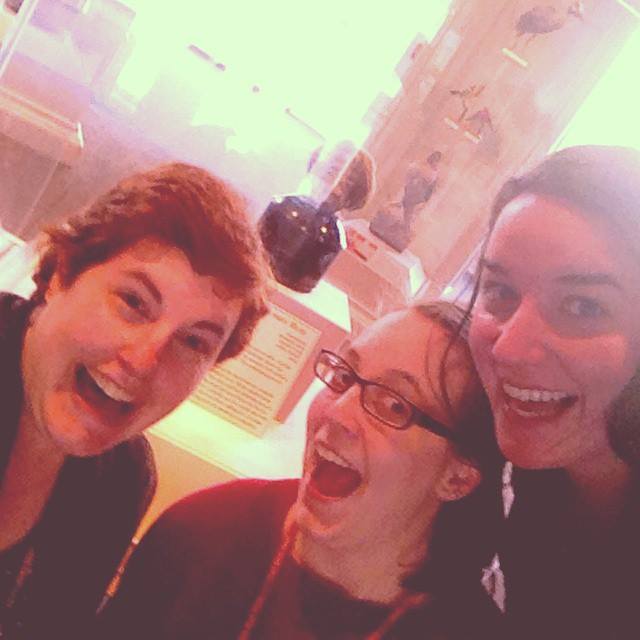
#MuseumSelfieDay with the shrunken head

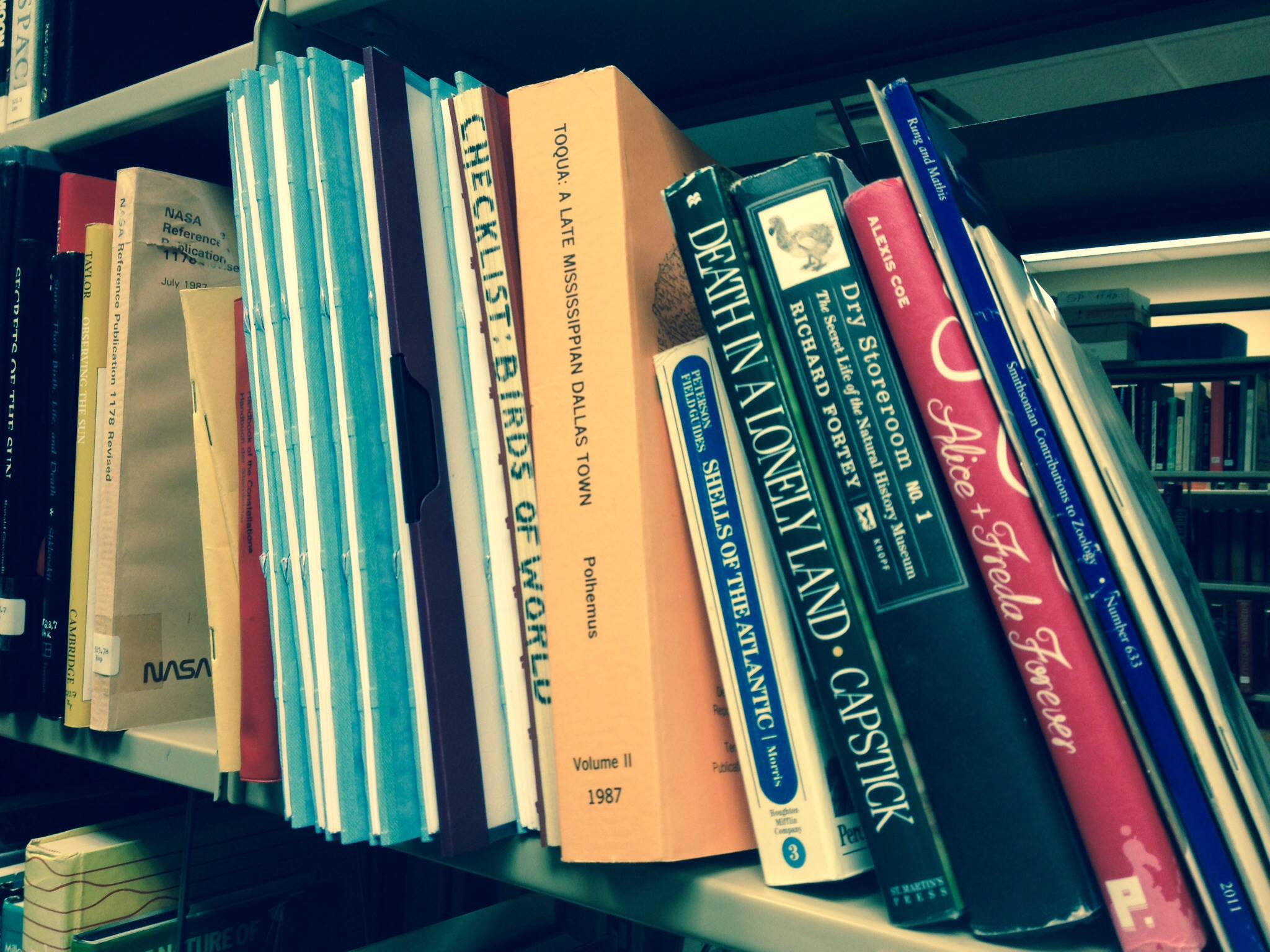
The past couple of weeks have seen a few crowd sourced, hashtagged shout outs to public history institutions. January 21 was the second Museum Selfie Day, which was inaugurated last year by museum blogger Mar Dixon. Today is #libraryshelfie Day, which also started in 2014 and was instigated by the New York Public Library. I took part in both because they were fun and got me out from behind my desk. Museums and libraries are interesting places, and the more that we do to encourage our patrons to visit, linger and make the place their own, the better off we will be.

10952241_685439008135_1516453955423878955_o
Happy #libraryshelfie Day from the Pink Palace’s occasional librarian.

A Collection of Jars

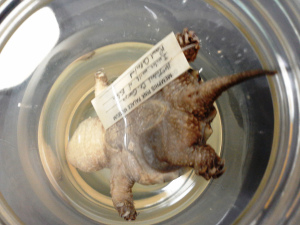
Sometimes my job is gross, like when I’m told to go pick out things from the wet collection for exhibit. What’s a wet collection? I’m glad you asked:

palacesocial's avatarThe Pink Palace Family of Museums

The Memphis Pink Palace Museum has a wide variety of objects in our permanent collection, including a biological collection of organic specimen in jars. The “wet collection” is stored in fluid, usually a pure alcohol solution or a mixture of alcohol, formaldehyde and acetic acid. The specific type of liquid depends on the developmental stage of the animal and the intended use of the specimen.  Specimens will last for several decades as long as they are stored in well-sealed containers in a cool room. The preserved animals can be used for research, teaching and exhibits. The Pink Palace’s collection consists of worms, jellyfish, reptiles, amphibians and a few mammals.

Turtle in jar1

Wet collection

Samples from the wet collection will be on display in Animal Grossology, a temporary exhibit that opened January 24 and runs until April 19, 2015.

View original post

The Reading Chair. A Delayed Gratification Story. Part I.

We recently moved a bookcase, which freed up some space in our living room. Upon taking a step back, we realized it would make a lovely spot for a lamp and a reading chair, largely due to the inability to see the TV from that location. The thing is, we have many projects (big and small) that we want to undertake this year, which means there’s no budget for a comfy chair.
2015/01/img_1186.jpg
Enter the reading chair fund. We are savers by nature, and we decided that we can reasonably take some small cash denomination out of each paycheck and wait a year. The idea is that next January, we will have enough cash on hand to buy our chair. It is a way for us to separate out some money to do something small that we simply want. Sometimes I need to be reminded that money is not an enemy, and this envelope of delayed gratification will help.

“Floppsy Woppsy is Dead, Dead, Dead!”

I followed a few tantalizing bread crumbs to uncover Floppsy Woppsy, the Piggly Wiggly’s short lived cousin. I wrote it up for the Pink Palace blog:

palacesocial's avatarThe Pink Palace Family of Museums

When the first Piggly Wiggly opened in 1916, it had a cousin named Floppsy Woppsy. The Floppsy Woppsy was a fruit window located inside the lobby of the original stores. It carried grapes, citrus, peaches, apples, pears and cantaloupes (but never watermelons).

Floppsy_0000

Floppsy Woppsy turned out to be a flop. In June 1917, Saunders pronounced, “Floppsy Woppsy is dead amid tears!” He decided that the fruit window was not profitable in its current location because produce was wilting before it could sell. He encouraged his customers to patronize market wagons for their produce until the Piggly Wiggly changed its setup. A week later, Saunders replaced the fruit window with a store directory and placed a bench underneath it. He started selling vegetables again within his serpentine aisles, instead in front of the turnstiles where “too many of [Floppsy Woppsy’s] friends imposed on her.”

It does not appear that many people…

View original post 19 more words

Thank you. I appreciate it.

Over the past few years, I have written many hundreds of thank you cards. A wonderful thing about our society is the idea of reciprocity. A major life event occurs and the people who care about you lift you up. They carry you to this new place and then help you build up something where there was nothing before. In my case, those major events were a marriage and a birth. My family, my friends, my parents’ friends, all provided us with the outward makings of our new lives. They gave us the pots to cook with and the lamps to read by. They gave us quilts to keep us warm and art to make our home. They provided a glider to read stories in and bouncers to calm. Diapers to change and clothes to wear. Reciprocity means that when the people I love are on the verge of something new, I will help them build their new lives as well. I realize in these moments of giving and receiving how connected I am to other people and how much those connections matter.

Because the truth is that it isn’t about the pots and the quilts and the onesies. It is about the fact that other people showed up. They listened to stories and nervous chatter. They made dinner and rocked a crying newborn. People are, often, wonderful.

What I have come to realize is that I enjoy writing thank you notes. I get out stationary and my nice pen and surround myself with the necessary address book and stamps. And then I stop and consider why it is that I am thanking this person, and it is always for more than the obvious. The latest round of notes began as a way to thank people for my son’s birthday gifts, but in that pause before I start to write, I realized that what I really wanted to thank everyone for was for being there this past year. The people who came to my kid’s party are the ones who came to the hospital or made dinners. They are the ones who stopped by when I needed company. They are the ones who answered the phones. They were there, and I believe that is worth being thankful.

I think that thank you notes are about so much more than acknowledging a gift. They are an opportunity to tell the people who go out of their way for us that we notice what they have done and that it has mattered. That we see kindness and thoughtfulness in their actions and want them to know that those qualities made a difference to us. A well written note is the least I can do for the people who help me build.

2015/01/img_1193.jpg

One year and a day

One day and one year ago a beautiful, squirmy boy entered my world. There was nothing that could have prepared me for all the hours that have followed. For starters, I never knew how much I could love someone so small. I had no idea that I could sing so many songs or read that many silly books and enjoy it. Or listen to pitiful cries, angry cries, hungry cries and nightmare cries. Or know the difference between them all.

My little boy is beautiful and stubborn. He has a learning face and eats everything we put in front of him. He loves to play with his toys and dance to Chuck Berry and Buddy Holly. His face lights up when Greg and I come into the room. He babbles, is constantly on the move, and likes bananas above all other produce.

A year and a day ago, my baby made me a mom. He changed my life in the best possible way, and I will never be the same again.

Useful Science

My boss introduced me to a new website that I find utterly fascinating. Useful Science is a nonprofit website that is run by a group of graduate and undergraduate science students (mostly, a quick perusal of the contributors page revealed at least one journalism major). Their pitch is that they will tell you useful scientific findings in under 5 seconds. The studies are listed under broad headings such as happiness, nutrition and creativity, and each sentence-long, abstract summary links to the original article. The website itself is intuitively designed, which makes me want to stick around and explore.

What I like about this site is its accessibility. I am interested in science, but I have never had any desire to be a scientist. I like reading and hearing about what is being done in labs without ever having to pipette anything. Basically, I am grateful that other people do it, and I want to know what they find. The snippets on Useful Science provide easy entry into a world that I do not really inhabit. As an added bonus, many of the findings are directly applicable to daily activities. For example, “The mere presence of a cell phone, even if not in use, decreased people’s performance on tasks that involved attention and cognitive processing.” So make a mental note to keep your cell phone away from you if you are doing something that requires your undivided attention. Surprising? Not really, but a good reminder nonetheless.

Another science oriented website that I learned about recently, this time from NPR, is Penguin Watch. Penguin Watch is a research project that is enlisting the internet to help monitor penguin colonies around the Southern Hemisphere. Researchers at Oxford have installed camera traps, which take photographs whenever they are triggered, in remote areas in an attempt to study penguin’s winter behaviors. You are given a photograph that you classify, which creates data for the researchers to analyze. The website is easily navigated and beautifully designed in addition to being an example of crowd sourcing at its best.

If you like science, penguins or finding new places on the web, check these sites out!