2015 in books, March

March is weird. This past weekend I helped with a neighborhood clean up and it started snowing. The next day was 72 degrees and sunny. Similarly, my reading choices have been all over the place.

  • On This Day in Memphis History by G. Wayne Dowdy
    • I could have listened to Willy Bearden read me this book during the WKNO segments of NPR’s All Things Considered, but I decided to read it. It’s exactly what the title would lead you to believe– a historical blurb about things that happened in Memphis for each day of the year. It’s a good jumping off point for some of the research I’m doing at the museum.
  • The Hero and the Crown by Robin McKinley
    • I forgot how much I enjoy reading fantasy. Nothing makes me vacate the ordinary like a new world with its own vocabulary and operating instructions. Robin McKinley creates a place with cohesive rules that provide structure and move the story forward. Rather than bog you down with the details, she jumps right in and lets the reader do some of the work of figuring out how Damar runs. I loved this story. Major thanks to my LibraryThing Secret Santa for the reminder.
  • Black No More by George Schuyler
    • Harlem Renaissance. 1931. Satire. Biting, unforgiving and funny.
  • Burton Callicott: A Retrospective by Ray Kass and the Brooks Museum of Art
    • This exhibition catalog from the Brooks Museum explains “…Callicott’s artistic development, which has always emphasized specific content, originally drawn from the physical, social and moral ‘backyard’ of contemporary Memphis…” I’m doing research about his early PWAP murals at the Pink Palace, which is what prompted me to read my first art catalog.
  • Eleanor & Park by Rainbow Rowell
    • Fantastically well written love story. Rowell’s descriptions of both main characters’ thoughts and feelings about their relationship rang intrinsically true. The way they over thought every aspect of sitting together or holding hands flew me straight back to my first boyfriend. It was a nice thing to remember. And it was even nicer to realize how far I’ve come.
  • 9 1/2 Narrow: My Life in Shoes by Patricia Morrisroe
    • I read this book for the LibraryThing Early Reviewer program. Patricia Morrisroe tells her personal story by reflecting on the shoes that she wore at certain points in her life. She is at her best when describing the history of particular shoe styles and relating that history to her memories. Some of the chapters work significantly better than others, but it is an overall worthwhile read if you like reading about style.
  • Vampires in the Lemon Grove by Karen Russell
    • I first read Karen Russell a few months ago when my boss loaned me Swamplandia! Much like that novel, this collection of short stories is well conceived and nicely written. The common theme throughout these stories is an element of the fantastical, whether it is vampires attempting to sate their thirst by sucking on lemons or several United States presidents trying to come to terms with their reincarnated horse selves. I especially liked her story that was set on the prairie a few years after the passage of the Homestead Act. The Act itself drove each person’s and phantasmagorical creature’s actions, and the end results are horrifying and thoughtful. All of the stories can stand independently, but it was nice to read them as a collected whole.

2015 in Books, February

I’ve been asked if I actually enjoy reading or if I just consume books. Frankly, I love everything about reading–the initial promise of the cover, the feeling of being wrapped in another person’s philosophy and emotions, the satisfaction of learning where these characters are going, and closing the book with the knowledge that it’s there if I ever want it again. I also go through phases with my reading. Sometimes I intersperse nonfiction and novels, other times I lean heavily to one side and abandon the other. On occasion, I will read one book at a time, but I usually have more than one going. Often I have a research  book underway at work, a novel that I left in the nursery, another book that I started so that I could have something to read and not wake up the toddler, and then one that I just got off of the library’s wait list on my Kindle. I also read very, very fast. Usually, I don’t skim or speed read, but I left graduate school with an incredibly fast reading pace. I had to unlearn how to “gut” books (read for the thesis and major supporting arguments and skim the examples), but I was ultimately left with the ability to read faster and deeper. Valuable skills, I can assure you.

I got poison ivy on my face this month, so I had a few days of binge reading while I tried desperately not to scratch my face. The steroid fueled read-a-thon also coincided with bad weather, which created a perfect storm of word absorbing.

    • Yes Please by Amy Poehler
      • Frankly, not as good as Bossypants by Tina Fey, but it was still a fun read. Poehler’s all over the place, but there are some great quotes that I had to highlight, among them, “I love my boys so much I fear my heart will explode. I wonder if this love will crack open my chest and split me in half. It is scary, this love.” Also, “A story carves deep grooves into our brains each time we tell it. But we aren’t one story. We can change our stories. We can write our own.” I can empathize.
    • Southern Cross the Dog by Bill Cheng
      • I really enjoyed this novel set between the 1927 Mississippi River flood and the early 1940s. Cheng’s sentences are beautiful, and his story invokes a world that is at once distant and yet relatable through characters’ emotions. He also handles ingrained racism deftly. I will definitely pick up Cheng’s next novel, which I hope is not too long in coming.
    • Fever Season by Jeanette Keith
      • Sometimes I take forever to read a book. I’m pretty sure I started this one at least eight months ago as my eating-lunch-alone-at-work book. Thankfully, I don’t have to do that very often. Keith wrote about the 1878 yellow fever epidemic, and (like the best historians can do) she turned the historical actors into multidimensional people who helped or fled the city for a variety of internal and external reasons. She also does not shy away from gender or racial analysis. This book is a great compliment to Mary Caldwell Crosby’s American Plague about the larger scope of yellow fever epidemics. Speaking of Crosby…
    • The Great Pearl Heist by Mary Caldwell Crosby
      • What I like best about Crosby’s writing is the way she is able to make well researched facts read like the twists of a detective novel. She gives a glimpse of what 1913 London was like on the eve of World War I and tells a good story at the same time. Little Free Library win!
    • We Are All Completely Beside Ourselves by Karen Joy Fowler
      • My LibraryThing secret santa sent me this novel in December. Since I had been hoping to read it ever since my coworkers gave it glowing reviews, I was pleasantly surprised to be gifted it. I loved it. Read it. You’ll be happy.
    • In a Sunburned Country by Bill Bryson
      • I once again struck gold in the Pink Palace’s Little Free Library. This one was armchair travel at its finest; Bill Bryson combines tourist traps, history, trivia and endless amounts of driving into something more than I thought possible. There’s a reason people pay him money to go far away and write about it.
    • Winner of the National Book Award by Jincy Willett
      • Meh.
    • The Orphan Master’s Son by Adam Johnson
      • This book takes on North Korea as a setting with complicated results. Sad, but with staying power.

The Museum’s Best Friends

New museum blog post. Our Friends are great, and I’m not only saying that because they made us lunch yesterday.

palacesocial's avatarThe Pink Palace Family of Museums

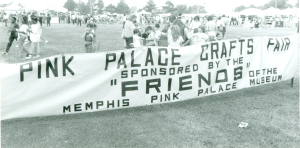
In 1959, a group of volunteers from the Junior League of Memphis started the Youth Museum project at the Pink Palace. They created touchable exhibits and led tours for school children. After several years of working with the museum, League volunteers Sara Misner and Merri Briggs founded the Friends of the Pink Palace Museum as an official, independent support group for the Pink Palace Family of Museums on June 13, 1968. Over the years, the Friends have served the museum in many capacities. They published Tales of a River Town, a children’s history of Memphis, and owned and operated the museum gift shop throughout the 1970s.

Banner with kids in background

In 1972, the Pink Palace Museum began a campaign to expand the size and scope of the museum. The Friends pledged a large donation for the project. They held the first Mid-South Crafts Fair in October 1973 to raise the funds. The first…

View original post 234 more words

Just don’t talk about my body

My body is mine. I know that other people can see it, but seeing is not ownership. Seeing what I look like and knowing what I think and feel are not linked. My body is not a topic for conversation. My body is not the most interesting thing about me, but it can do wonderful things. It can simultaneously hold a toddler and stir a pot. It can walk the dog and push a stroller. It feels sensations and tells me when it has done enough.

So don’t ask me if I am pregnant. What do you hope to gain from it? To make me feel uncomfortable about the perfectly natural thing my body did that made it change? That no matter what I tell myself, I am self-conscious about? To force me to acknowledge that I don’t look “perfect?” To try and force out information that I obviously have chosen not to share? I’m not pregnant, by the way, but you will find out when I am when I choose to tell you.

And don’t suggest that spandex will help. Or that I don’t do sit-ups. I exercise and am in better physical shape than I was before I had a baby. And spandex is uncomfortable. I like to feel at home in my skin and my clothes, not like I’m a sausage.

What will help is for you to not talk about my body. Because it is mine. I take care of it, cover it, and try my very best to love it. It’s mine to share as I will.

So the next person who refers to my “pouch” or asks me in sincerity if I am pregnant is not going to like the end result. Back off. Ask me about what flowers I want to plant this spring or how my child is doing. Ask me my feelings about the weather. Just don’t talk about my body.

Hard work

Every morning, I watch my almost toddling toddler begin his hard labor. This work will be constant throughout the day, but he starts every morning in a frenzy to make up for the hours spent on his stomach sleeping. First is reasserting his friendship with his seventy pound mutt. After a lot of mutual kisses and pats, they can go back to ignoring each other until mid-morning, when their affection needs to be reestablished. Then there is a lot of stacking to do and toys to move. Blocks and small ocean themed bath toys need to be put in boxes and taken back out. Rings need to be stacked, scattered and reassembled. There is a pause for reading. Then on to the music making and hitting of stationary objects with the xylophone stick. All the while he narrates his work with la(s) and na(s) and bbb(s). Shoes need their laces put dutifully inside them. Dog toys need to be stashed under bookcases.

Twenty minutes is a lot of time to fill.

Be Mine, Valentine

I wrote a post about Valentine’s Day card for the Pink Palace blog. Check it out:

palacesocial's avatarThe Pink Palace Family of Museums

Legend tells us that St. Valentine was an early Christian martyr who was imprisoned and sentenced to death for secretly marrying young soldiers despite Roman Emperor Claudius II’s ban on the practice. Before being executed, Valentine befriended his jailor’s daughter and wrote her a note signed “From Your Valentine.” From these fabled beginnings, the tradition of sending letters on Valentine’s Day began. In the 1700s, people sent letters on special stationary on the holiday, and the practice transformed into sending handmade cards by the early nineteenth century. Cards began to be commercially produced in England in the 1800s. Esther Howland, an 1847 Mount Holyoake graduate who was supposedly inspired after receiving an ornate English card, began to make and sell her own, which began the American Valentine industry. Victorian era cards were often elaborate, including some that were three dimensional. The practice of mailing cards to sweethearts and friends has…

View original post 118 more words

A new garden plot

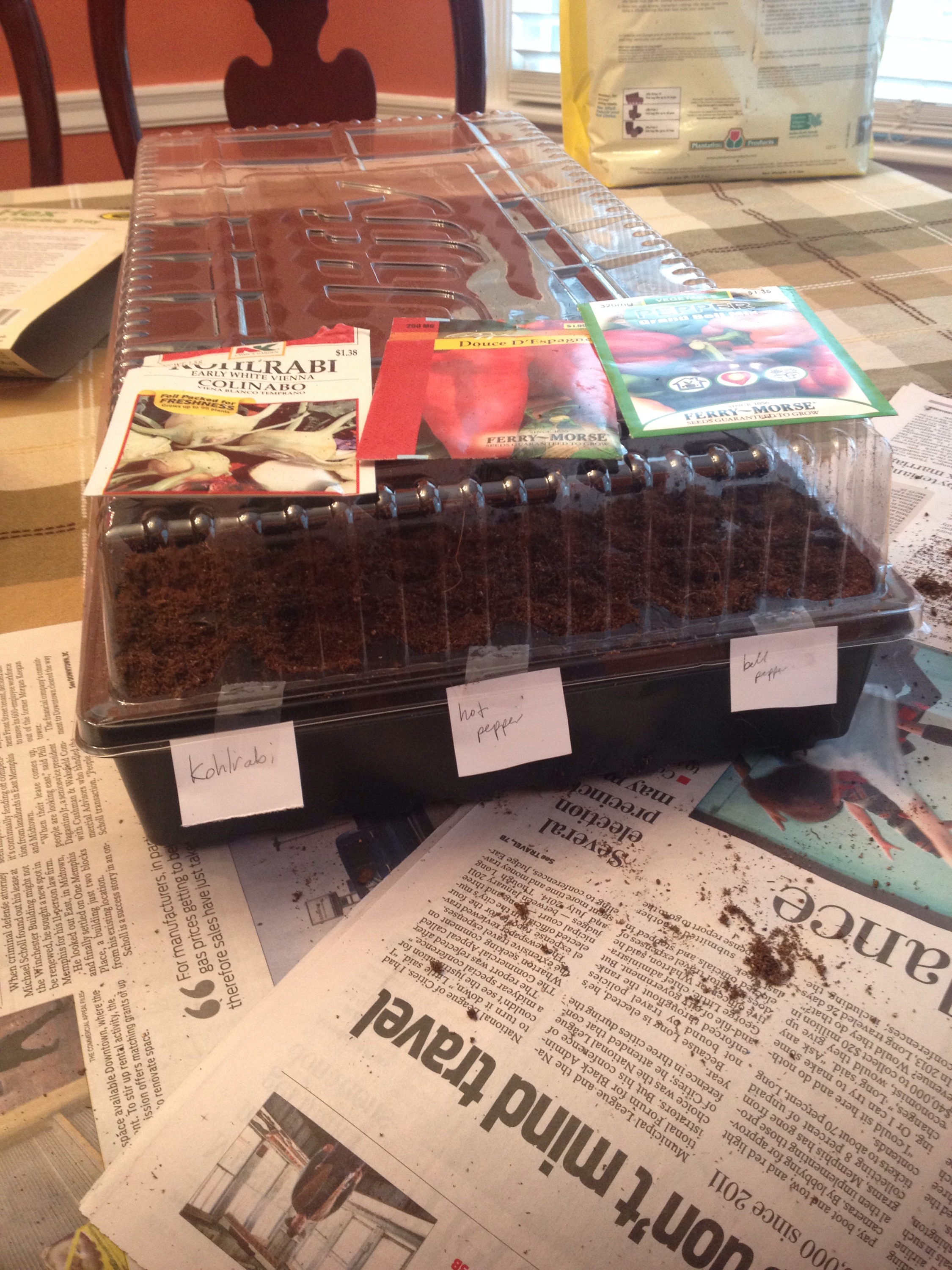
After some serious discussion and much internal debating, we decided not to get chickens like we had initially planned. Instead, we are going to use the back corner of our yard where we were going to put a coop as a kitchen garden. That area gets the most sun and is practically shaped so as to be easily fenced in. If we can switch plots at the Shelby Farms community garden and get closer to the water and my mom’s rows, we will continue our gardening adventure out there by planting field peas and potatoes. I don’t have the time to take care of plants that need tender loving care when those plants are a 30+ minute round trip from my house. However, I can commit to taking care of some low maintenance peas that can stand some benign neglect. Planting the squash and peppers and tomatoes at the house will let me give them more care on a daily basis and will also work better with the toddler.

In order to get the backyard garden spot ready for spring planting, we spent this last freakishly warm weekend clearing out privet. Our yard was a veritable privet forest when we moved in, but we have been slowly reclaiming the power lines, trees, camellia, pergola and path for the past year. We cleared the vines and hacked down the “trees” last year, but we still needed to clear out the roots. There’s no way that we got it all, but we did at least severely damage the beast’s central nervous system.

Unfortunately for me and my hypersensitive self, I did not realize there were poison ivy roots in the mix. I’m now sporting a lovely PI rash on my neck and face. All for the love of gardening.