Some Fine Hats

A post for the Pink Palace about some of the hats in our textile collection.

palacesocial's avatarThe Pink Palace Family of Museums

When it comes to fashion, hats have the practical function of keeping one’s head warm. However, hats are also symbols of identity that can tell us about the owner’s social class, occupation and personal style.

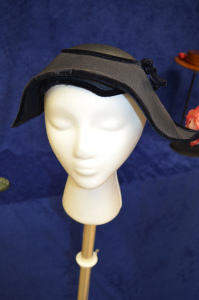
Navy velvet hat

One of the Pink Palace’s most unusual hats belonged to Ms. Mary Guidi. She was a successful Memphis lawyer wh
o practiced in the city for 42 years. During her career, she won a 1949 Supreme Court-mandated retrial that was ordered on the grounds that the initial trial judge “had an aversion and prejudice to women lawyers.” She also won a case before the Tennessee Supreme Court in 1955 to require more specific language in police warrants. Guidi worked in the Falls Building downtown. One day she overheard Luther Hammons say that he could make anything out of wood so she challenged him to make her a hat. According to newspaper columnist Eldon Roark, Hammons replied, “I’m…

View original post 90 more words

Soundtrack

I’ve noticed a subtle, yet persistent change in the soundtrack of my life. It used to include large spans of quiet; I am not one for constant aural stimulation. Music is wonderful, but I don’t need to always have it on. Sometimes I turn off my car radio and drive accompanied by my daydreams. Part of the reason is because repetitive noises trigger my anxiety, but I also enjoy the moments when I can hear what is going on around me without having secondary noises cover up the sounds of the world. I want to have the space to hear the cicadas and my house’s weird creaks.

That quiet is now largely relegated to a morning cup of coffee and a few snatched moments of sitting on the back stoop. Over the past several months, my boy has been steadily finding his voice. It started as babbles and has progressed to monosyllabic words. He always tells me where his “pup-pup” [puppy] is. He can find the “car” in his “buh-buhs” [books] and tell me that they “go-go-go” and that when they go they sound like “mrrr-mrrr-mrr.” Yesterday, he meowed when he saw a picture of a kitten; I didn’t know he knew that one. He tells me his favorite foods, “na-na” and “bu-bas” [banana and blueberries]. And, because it’s never to early to teach good manners, he will say “puh-puh” [please] and varying versions of thank you when prompted.

He and I trade off narrating our days together. In the midst of his babbles, I catch more and more words. He gets frustrated when I don’t understand him, which is prompting me to listen harder to pick up on what he means. Since he loves to dance, we listen to more music. He likes to break it down to Chuck Berry and uptempo pop music.

I’m glad that my soundtrack has changed because it means my life is alive and growing. There will always be a time for quiet, but now is the time for relearning how to listen and to appreciate what makes a good beat.

2015 in Books, June

This month I went for the horrific and depressing. It was one of those accidental reading mash-ups that happen from time to time. Two summers ago I found myself reading book after book set in WWII England. This June it was colonial Australian history and one of the worst hurricanes in modern America.

  • Isaac’s Storm: A Man, a Time, and the Deadliest Hurricane in History by Erik Larson
    • Next summer we are hosting an exhibit called Nature Unleashed from The Field Museum. For pre-exhibit research I decided to read about the 1900 Galveston, Texas, hurricane (to go along with last month’s book on Mississippi River flooding). This book was published in 1999, well before Hurricane Katrina hit New Orleans, but my brief internet searching says that the 1900 Galveston storm was more deadly. What I liked most about Larson’s book is that he combined the science of storms with an explanation of the historical mindset of turn-of-the-century America. He managed to capture the technological hubris of the day, which is shockingly similar to the present. Larson also told a few individual stories out of the thousands. It combined to make a thoroughly interesting, albeit sad, read.
  • The Fatal Shore: The Epic of Australia’s Founding by Robert Hughes
    • I read two books this month. Part of the reason is because this bestseller from 1988 is 600 pages long. That’s right, a 600 page history bestseller. That alone was enough to pique my interest. Also, my historical understanding of Oceania is lacking in the sense that it is nonexistent. I never had a class on the area. In fact, the closest I got geographically was one on British India, which shared a few colonial similarities. Bill Bryson introduced me to contemporary Australia, but I wanted to learn more. Hughes covers this immense topic with engaging prose. He talks about class divisions in England, a survey of British crime, penal theory, the practicalities of setting up a colony on an unexplored continent, the assignment system, aboriginal culture, secondary punishment sites, and the mass brutality on Norfolk Island. However, in the midst of punishment, there was also opportunity. Hughes stressed that not all masters were sadists and that conditionally pardoned prisoners often had better economic prospects than their counterparts in England. What a world.

I think it’s time to read some fiction.

Burton Callicott’s Mid-South Allegory

A new post for the Pink Palace about a Burton Callicott painting that I found out we own:

palacesocial's avatarThe Pink Palace Family of Museums

Three of the largest objects in the Memphis Pink Palace Museum’s collection are Burton Callicott’s Hernando De Soto murals in the mansion lobby. Callicott painted these murals in 1934 as part of the New Deal’s Public Works of Art Project. In 1936, he competed for one other Works Progress Administration mural to be placed in the federal courthouse in Vicksburg, Mississippi. He titled his entry Mid-South Allegory.

DSC_0042

In this painting, Callicott shows his views on social values and racial equality. The middle black figure picks the cotton that the central white figure processes into cottonseed oil. The two men in the upper portion are both engaged in bringing the crop to market. Artist Ray Kass argues in Burton Callicott: A Retrospective that the painting gives equal emphasis to the contributions of white and black Southerners in the development of the region’s main crop. Additionally, the symbolic figures at the…

View original post 203 more words

Carroll Cloar

A new post for the museum blog about Memphis artist Carroll Cloar:

palacesocial's avatarThe Pink Palace Family of Museums

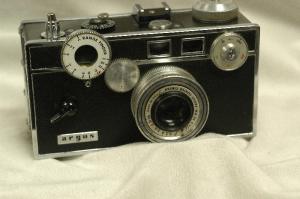
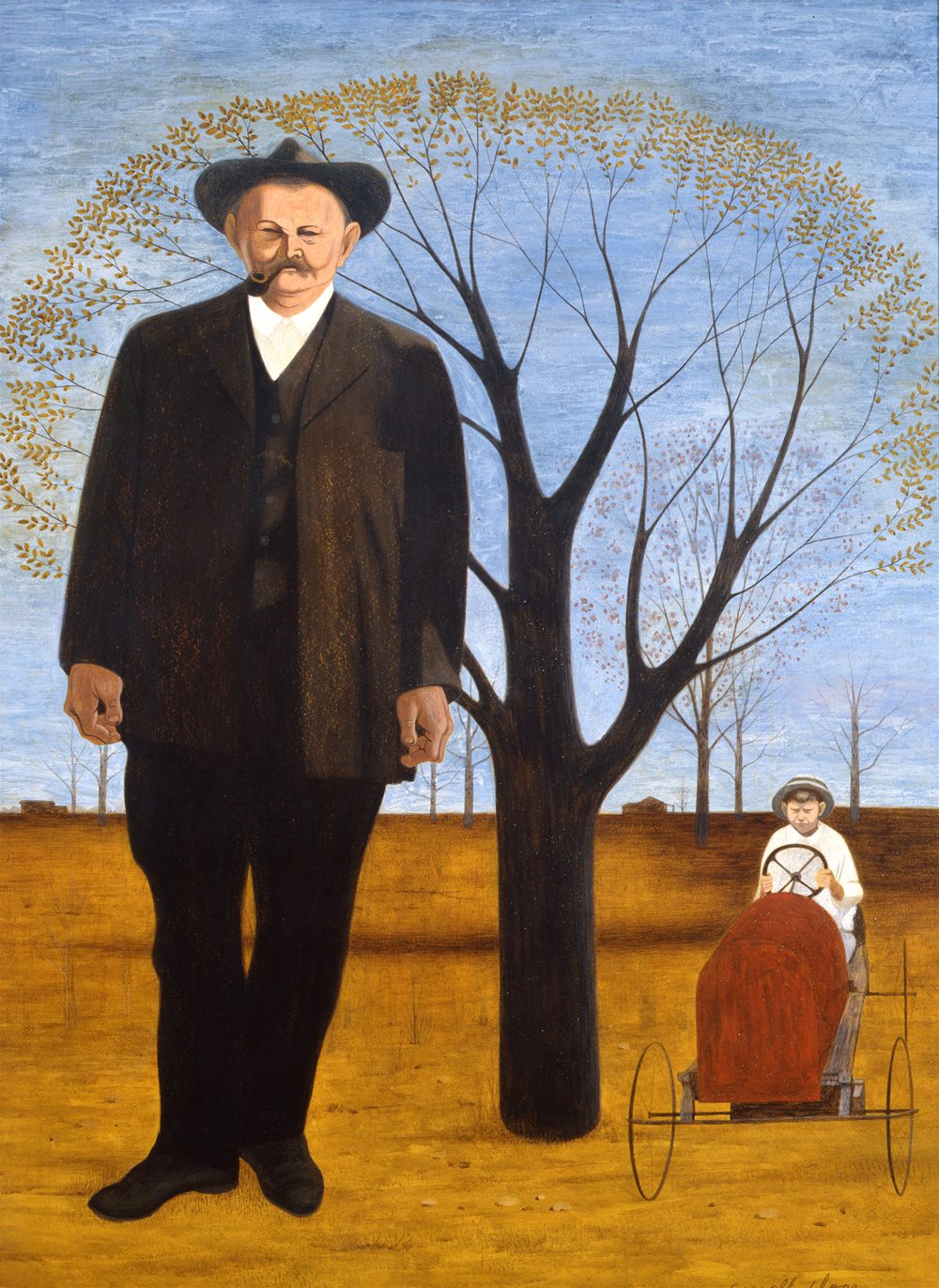
Carroll Cloar was one of the most famous artists to call Memphis home. He was a Realist painter whose works occasionally took on a Surrealist slant. One of his most well-known paintings is My Father is as Big as a Tree, which is owned by the Memphis Brooks Museum of Art. His paintings are in public and private art collections throughout the county. The Pink Palace Museum has several of his preliminary sketches as well as his army uniform and two of his cameras in our collection.

DSC_0060-JPG635034494220000000

Cloar was born in Earle, Arkansas in 1913 to a farming family. He moved to Memphis in 1930 to attend Southwestern (now Rhodes College) and study English. After graduation, he traveled around Europe before returning to Memphis to study at Florence McIntyre’s Memphis Academy of Art on Adams Avenue. He followed George Oberteuffer to a new school on Front Street before going…

View original post 221 more words

Toddler/Dog Love

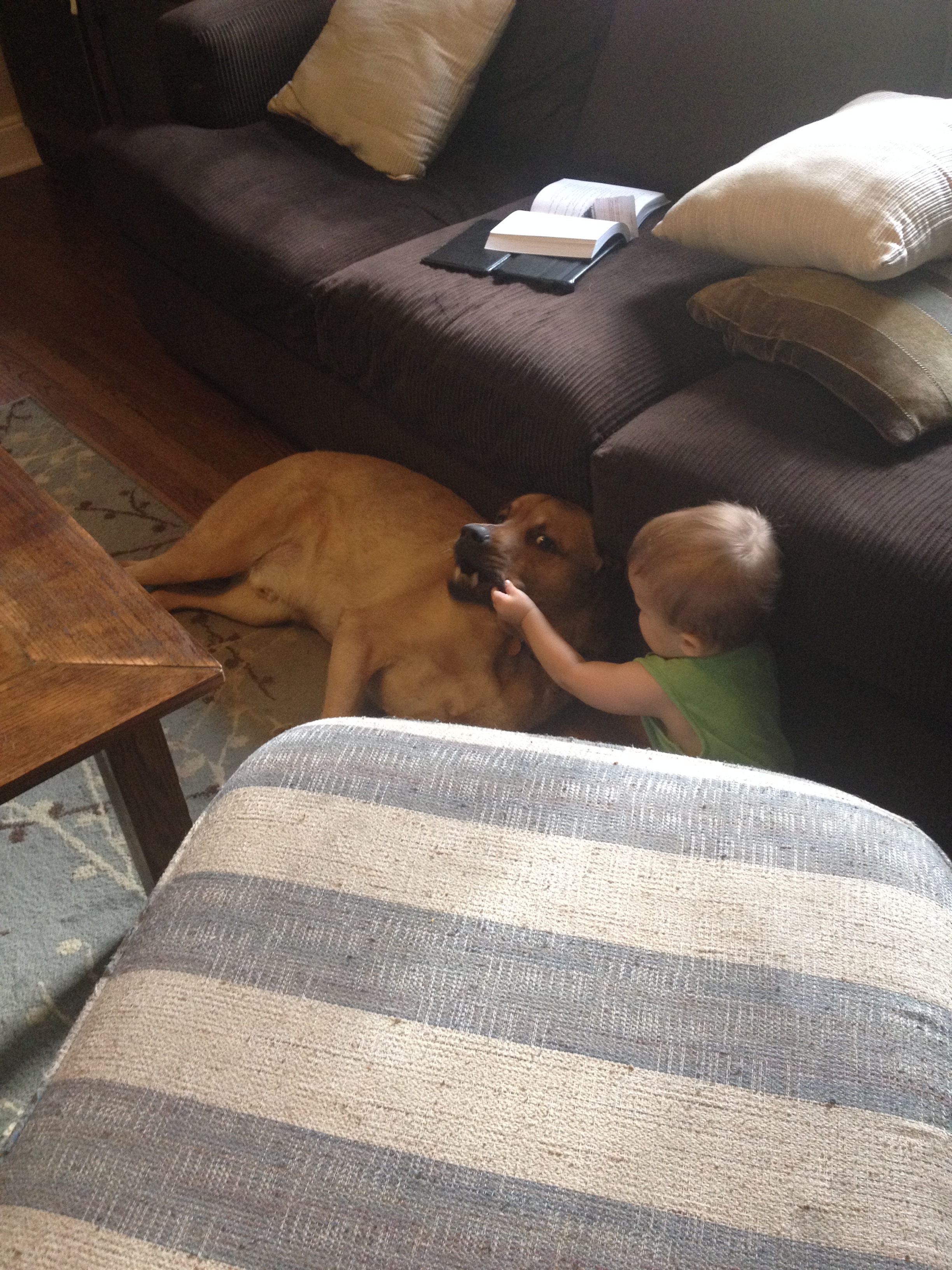
My attitude towards my toddler’s relationship to my dog Zeb will likely make some parents and concerned citizens of the internet cringe. However, the beauty of parenting is that I am not required to pay attention to what anyone [other than my parental counterpart] thinks as long as I am not hurting anyone. Which, despite what you may think after you read what follows, I’m not. Consider yourself disclaimed.

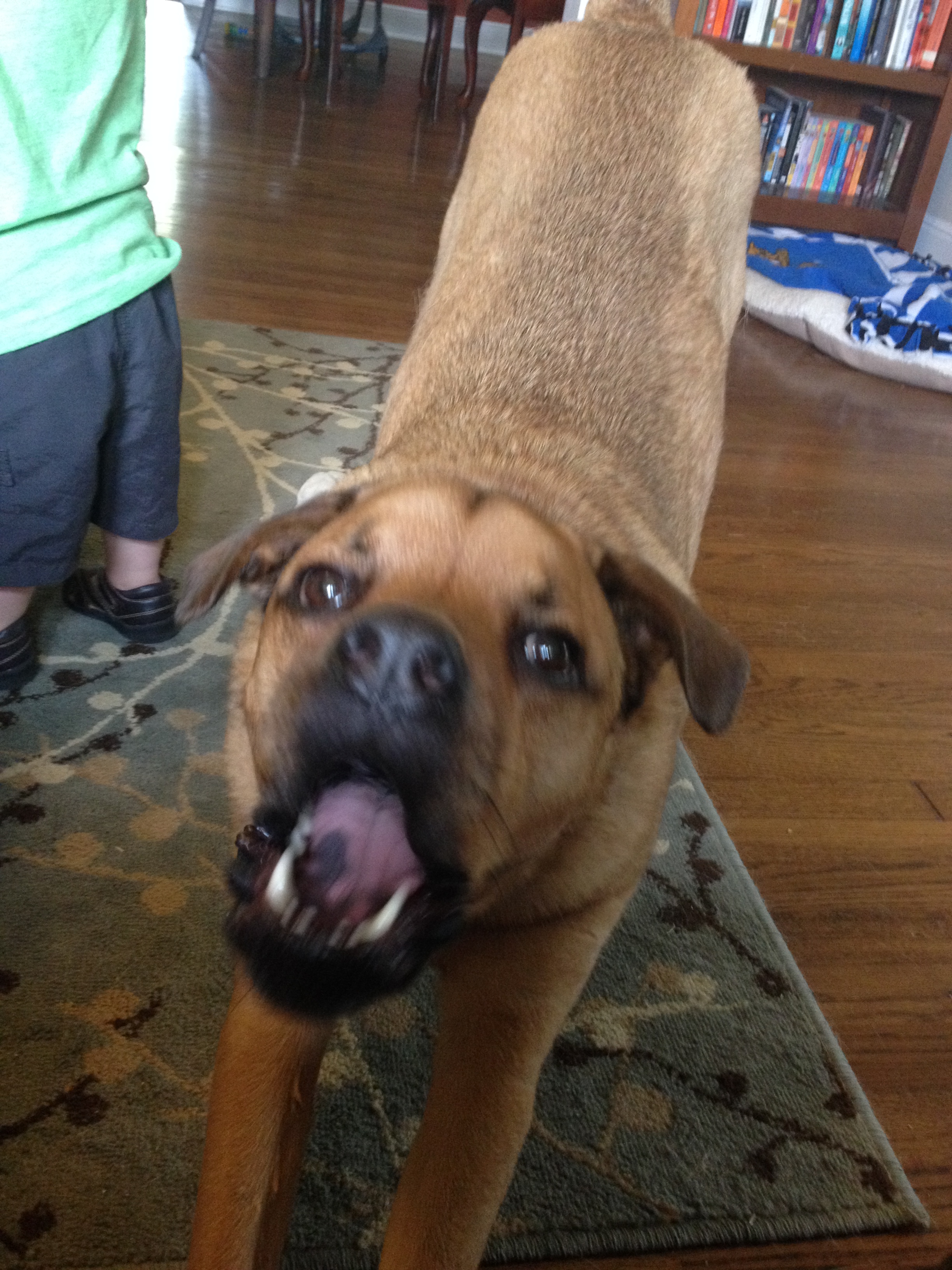
My 70 pound mutt from the pound.
Zeb, my 70 pound mutt from the pound.

From the beginning of their friendship, dog and baby have been united by saliva. We brought our newborn home from the hospital, and Zeb gingerly licked him on the head with the very tip of his tongue. He then proceeded to ignore his existence for a good while until the bald puppy started to do things.

Zeb sniffed the baby and kept tabs on where he was, but generally he stayed away. Every new thing my boy learned,  my dog observed. One day, my boy noticed my dog and began observing him as well. Then came the big change.

Mobility.

When Noah began crawling, Zeb wasn’t sure what to do. He gave him a wide berth for a while before accepting that the tiny human was now a force to be reckoned with. He licked him, tolerated the invasion of his space and got up to move when his paws had been touched too many times.

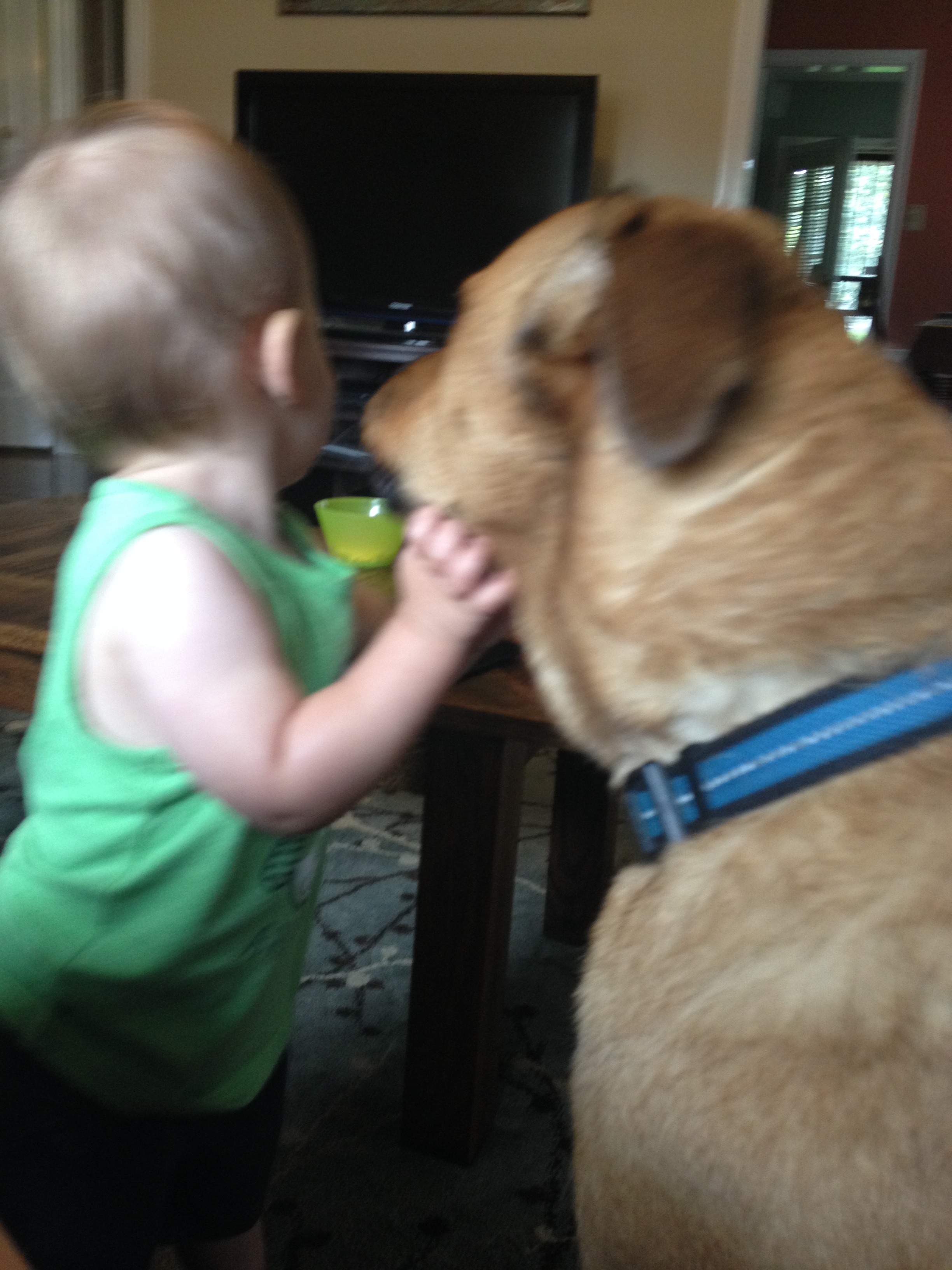
Things really didn’t start to get slobbery until the toddler started walking. Noah likes to give Zeb kisses. These kisses involve opening his mouth wide and letting the dog lick his tonsils. It’s very gross. Noah also chases Zeb around the yard to give him sticks, through the house terrorizing him with his ball popper, and into his formerly solo spaces to pet him “gently.” Noah likes to throw him tennis balls. The good dog, however, won’t play with toys that belong to the kid and refuses to pick up balls (even when they are dog toys) if Noah is playing with them. This standoff leads to tension that is normally resolved by tears and parental distraction.

Give a kiss, get a kiss.

I never thought that I would refer to my neurotic dog as patient. Zeb is, after all, afraid of trash cans, cameras and a variety of children’s toys. However, he also lets Noah “pet” him, which is really just slowed down hitting. He also accepts it when his tail and paws get stepped on by simply moving locations. He even lets Noah manipulate his jowls without complaint.

Toddler plays with dog's face.
Toddler plays with dog’s face.

From the toddler’s point of view, his puh-puh is his beloved friend, and Noah shows his love by giving kisses. So while I may inwardly cringe at the amount of dog drool covering my boy, I’m glad to see them love each other.

2015 in Books, May

Another month’s worth of reading:

  • Rising Tide: The Great Mississippi Flood of 1927 and How It Changed America by John M. Berry
    • It took me from mid-March until the beginning of May to finish this behemoth. Berry wrote an exhaustive history of flooding on the Mississippi River, focusing his attention on the engineers who unwittingly created a problem, the 1927 flood, and the relief efforts. He shines specially attention on Greenville, MS, and New Orleans to show how the two cities were profoundly affected by the disaster. I knew that the flood was bad, but I did not understand the massive scale of the fallout or its profound impact on African American migration and national politics. I read this one at work in preparation for next summer’s Nature Unleashed exhibit.
  • Peter Pan by J.M. Barrie
    • I’ve watched the Disney version of Peter Pan a few times and Hook a few times more than that, but this was my first time reading Barrie’s classic. It was sadder than I expected with children falling out of perambulators, tertiary characters dying and the focus on how the Darlings felt about their children disappearing. None of those elements come across in Disney’s takes, but I found that they are what make the story a classic.
  • Beale Street Dynasty: Sex, Song, and the Struggle for the Soul of Memphis by Preston Lauterbach
    • Let me preface this review by saying that I met Preston in the archives at the public library when I was doing some Piggly Wiggly research and he was going through newspaper microfilm. He helped me track down some information about 1915-1930 Beale, which I have been researching for the new permanent exhibits at the Pink Palace. This book gave me everything that I needed to understand how this relatively small area came to be the base of African American culture and politics in the Delta. It is well researched, interesting to read and full of anecdotes that make the reading fun. If you’re from Memphis or want to learn about a large piece of the city’s soul, read it. You won’t be disappointed.
  • Rain: A Natural and Cultural History by Cynthia Barnett
    • I thoroughly enjoyed Barnett’s take on rain, a topic I usually only consider when I desperately want it for my garden or to avoid it at an outdoor event. She approaches the subject with a mixture of science, environmental activism and cultural history. I think that she was at her best in her chapters on the recent drought in California and Colorado and the consequences of building in floodplains and historically drought-prone areas. Much like Mark Kurlansky, Barnett takes a broad topic and examines it in relation to multiple facets of science and human history. I received this book for the LibraryThing Early Reviewer program.
  • The Water and the Wild by K.E. Ormsbee
    • This book was another from the LibraryThing Early Reviewer program. The Water and the Wild is aimed at ages 8-12, but it is an entertaining fantasy read for adults as well. Ormsbee creates a world parallel to Earth that is inhabited by sprites, will o’the wisps and fanged beasts. Lottie, the main character, has to learn the rules of Albion while going on a quest with her new acquaintances to retrieve a cure for her best friend back on Earth. Many of the characters are multi-dimensional; however, Adelaide, one of the young sprites, quickly begins to sound redundant with her focus on refinement. Overall, Ormsbee’s book is a well-written world for young readers, which is why I passed it on to my appropriately aged cousins.

Memphis and the Vietnam War

My latest Pink Palace post about Memphis and the Vietnam War:

palacesocial's avatarThe Pink Palace Family of Museums

American involvement in Southeast Asia began in 1954 when the United States government offered support to a corrupt but pro-American democratic government in South Vietnam and lasted until the fall of Saigon in 1975. While Congress never officially declared war, thousands of American soldiers died and billions of dollars were spent in attempts to contain the threat of communism in North Vietnam and prevent its spread to other parts of Southeast Asia. President John F. Kennedy began sending military advisors to Vietnam during his presidency, and in 1964, President Lyndon B. Johnson escalated the conflict under the auspices of the Gulf of Tonkin resolution. By 1968, there were over half a million American troops fighting in Vietnam. President Richard Nixon announced a plan for the Vietnamization the war, and in 1970, he ordered troops to invade Cambodia in order to cut off enemy supply lines. Public support for the war…

View original post 378 more words

Some Awareness

May is a time for flowers, mothers and, at least in Memphis, city-wide parties. It is also a time for mental health awareness. I struggled with whether or not to write this post, but I’m taking a deep breath and being brave.

I do not consider myself “crazy,” but I do live with a mental illness. I am also a functioning and productive member of society with a family, a job and a lot of passions. There’s often a stigma attached to the words mentally ill. It conjures up visions of not-guilty-by-reason-of-mental-disease-or-defect pleas on Law & Order. The reality is that millions of people in the U.S. are just like me.

In other words, I fall into the 18.1% of Americans (as quoted from NAMI) who live with an anxiety disorder. More specifically, I have been diagnosed with generalized anxiety disorder (GAD) as well as depression. To be clear, diagnosed means that a medical professional has evaluated my symptoms and given me a formal diagnosis. Not the internet. The Diagnostic and Statistical Manual, 5th edition (DSM-5) criteria for a GAD diagnosis as listed on the Mayo Clinic‘s website are:

  • Excessive anxiety and worry about several events or activities most days of the week for at least six months
  • Difficulty controlling your feelings of worry
  • At least three of the following symptoms in adults and one of the following in children: restlessness, fatigue, trouble concentrating, irritability, muscle tension or sleep problems
  • Anxiety or worry that causes you significant distress or interferes with your daily life
  • Anxiety that isn’t related to another mental health condition, such as panic attacks or post-traumatic stress disorder (PTSD), substance abuse, or a medical condition

I started noticing that something wasn’t right during my sophomore year of high school. I didn’t have the knowledge to know what was going on, but  I did know that crying uncontrollably and not being able to articulate why was not normal behavior. Like the teenager that I was, I was ashamed and thought it was a failing on my part for not being better or stronger. I didn’t tell anybody and tried to outwork it. I figured that I could be better and then no one would need to know that I felt out of control. My high school was a high-stress environment, which added further fuel to my candle that was already burning on both ends.

When I got to college, things got worse. Instead of breaking down every once in a while, it began to happen multiple times a week. There was one big change though–I wasn’t doing it alone anymore. I met Greg on the second day of college orientation. We had known each other for a week when I told him what I felt was my big, embarrassing secret. Actually, I didn’t tell, I cried. And he stayed and showed up the next day and every day since.

In addition to letting me cry in his room after I crammed as much as humanly possible into my day (trying to outwork it, remember?), Greg helped me come up with strategies to minimize the enormous pressure I was putting on myself. Clutter gave me anxiety? He helped me pack my dorm and move back into my parents’ house each spring. Couldn’t say what was wrong? That’s ok, just try to put the apprehensions into words. Most importantly, he helped me come to the decision to talk to my doctor about the fact that I was always worried.

After years of building up reasons to keep all this to myself, I was shocked at how fast things happened once I broke the silence. My doctor listened, gave me a prescription for a selective serotonin reuptake inhibitor, told me to stick with it as the medication built up in my system, and sent me on my way. My supportive coworkers encouraged me to see a psychiatrist who ended up putting me on a higher dosage of the same medication. Within a month, I felt better than I had in years. Combined with the medication is a decade’s worth of lifestyle changes that I adopted to help me deal with the triggers of my anxiety. For example, I cannot focus when there is clutter, which is why everything in my house has a place. I still feel anxiety, but it doesn’t rule my life. I no longer spend hours each day worried about nothing in particular.

Most importantly, I started telling people that I have GAD. I don’t make up excuse for myself when I need to leave a room because I’m feeling anxious. I just go, and if people ask, I tell them the truth. My alarm goes off at 6:45 every night to take my medication. If someone asks me what I’m taking, I tell them.

Because I have a chronic mental illness, and I have nothing to be ashamed of.